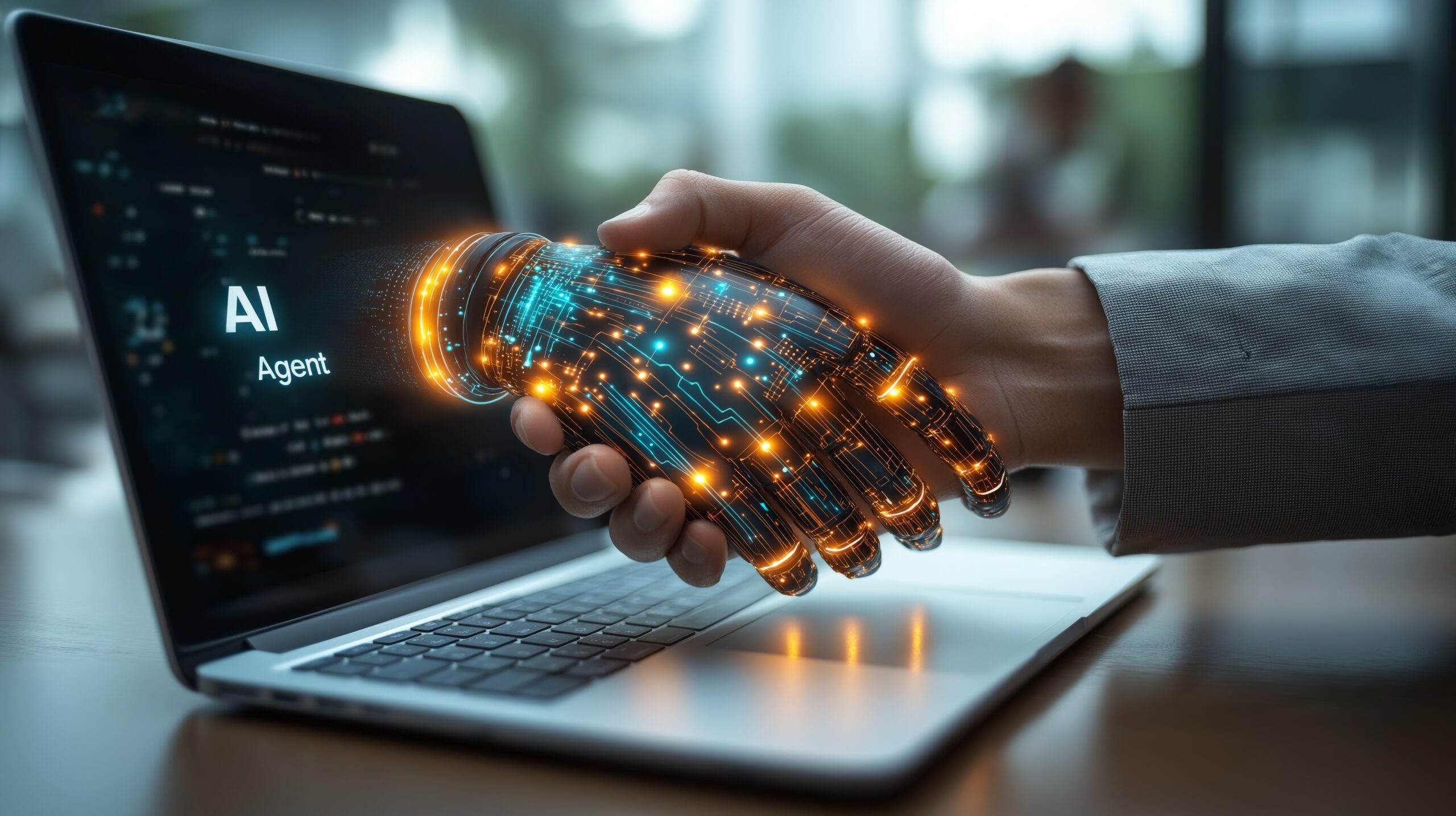
AI Is Becoming a Teammate, Not a Tool
What That Means for Product and Marketing Teams
For most of its life inside organisations, AI has been framed as a tool.
Something you trigger.
Something that runs tasks in the background.
Something that saves time at the edges of a workflow.
That framing made sense when AI was limited to automation. It no longer holds.
As AI systems become more capable, they are moving upstream. They are no longer just executing decisions. They are shaping them. AI is beginning to sit alongside teams, not beneath them.
AI is becoming a teammate.
The quiet shift happening inside teams
This shift rarely arrives with a big announcement. It shows up quietly.
A product manager asks AI to sense check a roadmap.
A marketer explores multiple campaign angles before choosing one.
A designer tests ideas conversationally instead of sketching in isolation.
At first, AI looks like a faster assistant. Over time, it becomes something else, a thinking partner that helps teams reason through uncertainty.
This is where the tool metaphor breaks.
Tools are passive. Teammates are participatory.
From execution layer to thinking partner
Early AI systems lived at the bottom of the stack. They automated emails, tagged data, generated reports, or optimised bids.
Today’s systems participate much earlier. They surface patterns humans miss. They highlight trade offs. They propose options rather than answers.
They help teams explore the shape of a problem before committing to a solution.
This does not replace human judgement. It sharpens it.
The most valuable contribution AI makes is not speed. It is perspective.
How everyday work starts to change
When AI becomes a collaborator, familiar workflows evolve.
Briefs stop being static documents and become living conversations.
Analysis shifts from reports to dialogue.
Dashboards stop reporting the past and start suggesting what to look at next.
Teams no longer ask AI to do something. They ask it to think with them.
This creates a different rhythm of work. Less linear. More exploratory. Decisions are informed earlier, not justified later.
Why trust and boundaries become critical
A teammate is trusted, but not unchecked.
When AI participates in thinking, teams must be explicit about boundaries. What can the system suggest? What can it evaluate? When must a human intervene?
Without clear guardrails, AI becomes either risky or ignored. Too much autonomy creates fear. Too little makes it irrelevant.
Trust is built through consistency, transparency, and restraint. Teams need to understand not just what AI recommends, but why.
Responsibility still sits with people. AI supports judgement. It does not own it.
The cultural shift most organisations underestimate
The hardest part of this transition is not technical. It is cultural.
Teams must become comfortable with uncertainty. With probability instead of certainty. With exploration before commitment.
Leaders must allow space for AI assisted thinking without treating outputs as decisions. Teams must learn to challenge AI constructively rather than defer to it.
Organisations that treat AI as a shortcut often struggle. Those that treat it as a collaborator adapt faster.
What teams that get this right gain
Teams that embrace AI as a teammate gain more than efficiency.
They gain better decisions because more options are explored.
They gain shared understanding because reasoning becomes visible.
They gain confidence when navigating complexity.
AI does not make teams smarter on its own. It creates the conditions for better thinking.
The future of work is not humans versus AI.
It is humans working alongside it.
FAQs
What does it mean for AI to become a teammate, not a tool?
It means AI is starting to participate in work rather than just supporting a single task. A tool helps you do something faster. A teammate helps you think, decide, and move work forward, often across multiple steps. That shift changes how products and internal systems should be designed, governed, and measured.
What kinds of work should an AI teammate handle?
The best starting point is work that is repetitive, high-volume, or slow because people spend time searching, summarising, drafting, or coordinating. An AI teammate can help with decision support, triage, and workflow automation, as long as boundaries and accountability are clear. For examples of what this can look like, see What We Build.
How do you keep an AI teammate reliable and under control?
Reliability comes from clear boundaries, measurable evaluation, and sensible fallback behaviour. A good system makes it obvious what it is doing, what it is unsure about, and how a person can correct or override it. Testing should include edge cases and failure modes, not just best-case outputs. For how we validate fast before scaling, see AI Labs.
What changes for teams when AI becomes part of the workflow?
The work shifts from using a tool to managing a system. Teams need ownership, governance, and clear ways to monitor performance over time. It also changes experience design, because trust and clarity become core parts of the product. For the principles behind our approach, see Who We Are.
What is the best next step if we want to explore this?
Start with Collaborate and share the workflow or product area you want to improve, plus the constraints you have to operate within. We will come back with clarifying questions, then recommend a sensible next step based on what you need the system to do and how it will be used in practice.